← Home / Discover Namibia
Namibia is a land of vast, humbling spaces. It is home to the oldest desert on Earth, coastlines choked with shipwrecks, and some of the most resilient people and wildlife on the planet. To truly understand Namibia before you visit, you have to look beyond the maps at the history and natural forces that shaped it.
Namibia Self-Drive Safaris: Etosha to Sossusvlei
Taking its name from the Nama word Namib—meaning "vast place"—Namibia is the second most sparsely populated country on earth. The geography is dominated by the spectacular Namib Desert running down the Atlantic coast, and the dry Kalahari basin flanking its eastern borders.
In the southwest lie the colossal dunes of Sossusvlei. Tinted deep orange by oxidized iron minerals, these mountains of sand are among the highest in the world, sculpted continuously by coastal winds over millions of years.
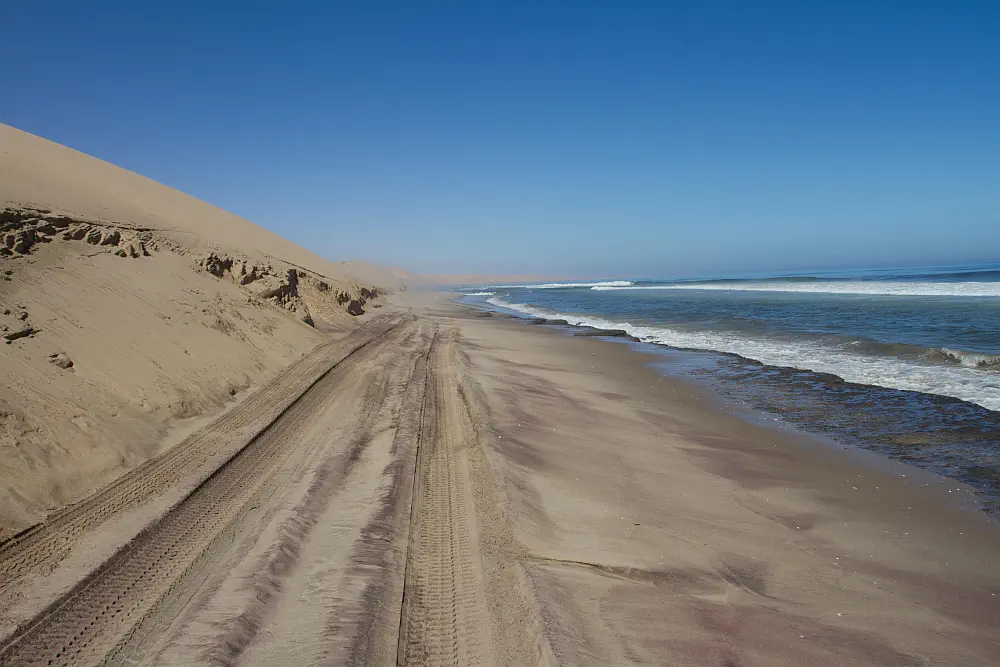
The spectacular Skeleton Coast where the ancient dunes meet the Atlantic Ocean.
Bespoke Namibia Tours: Ancient Tribes & Cultural Heritage
Namibia’s history begins with the indigenous San (Bushmen), who traversed these arid expanses for thousands of years. At places like Twyfelfontein in Damaraland, they left behind one of Africa's densest concentrations of rock carvings, meticulously detailing rhinos, elephants, and human tracks in red sandstone.
The late 19th century brought a harsh colonial chapter. Annexed as German South West Africa in 1884, the country experienced brutal conflict, particularly the Herero and Nama war. You can still see remnants of this era today in the distinctive Bavarian architecture, coastal promenades, and German bakeries of Swakopmund and Lüderitz.
Following World War I, South Africa administered the territory under a League of Nations mandate, later enforcing apartheid laws. After decades of liberation struggles led by SWAPO, Namibia finally won its hard-fought independence on **March 21, 1990**, emerging as a peaceful, multi-party democratic nation.
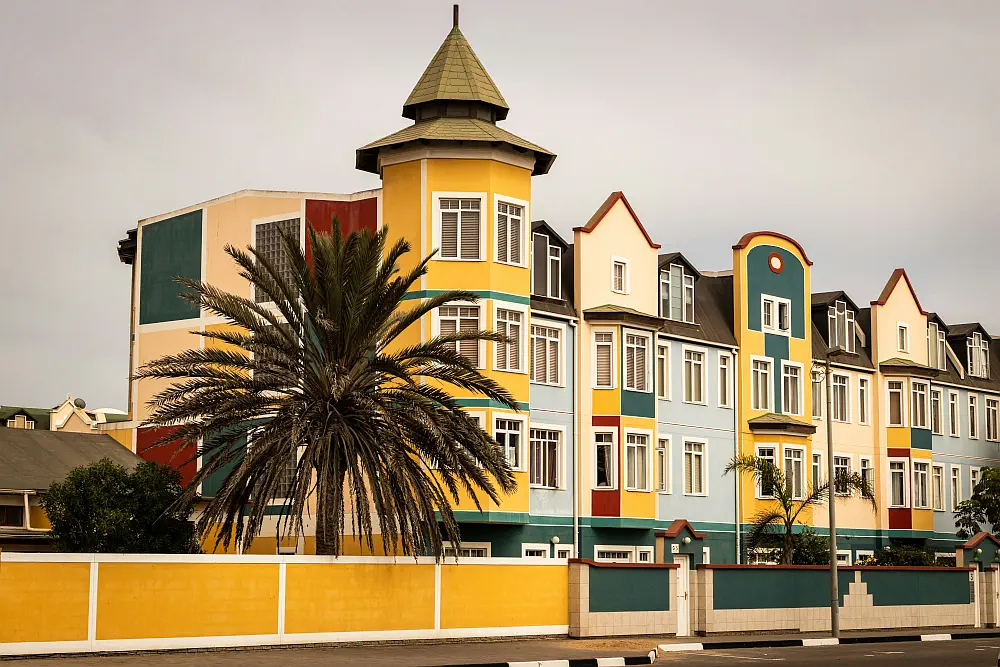
The Promenade Swakopmund, Namibia. Image by Grant Durr.
Experience Namibia Firsthand
Reading about these immense landscapes is one thing, but standing at the edge of the Fish River Canyon or watching an Etosha sunset is life-changing. Let's design your journey.
Request a Custom Route Draft
Guided Photographic Safaris & Cultural Tours in Namibia
Today, Namibia is a proud melting pot of cultures, home to roughly 2.6 million people divided across diverse ethnic backgrounds.
- The Himba: Living in the rugged, northwestern Kunene region, the semi-nomadic Himba are famous for preserving their traditional way of life. The women cover their skin and braided hair in otjize—a mixture of milk fat and red ochre stone that protects them from the desert sun.
- The Herero: Historically related to the Himba, Herero women wear striking, Victorian-style gowns and horn-shaped headdresses, a distinct cultural adaptation of historical German missionary attire.
- Languages: While English is the sole official language spoken across schools and government offices, you will regularly hear Oshiwambo, Afrikaans, German, and the beautiful, complex "click" languages of the Nama and Damara communities.
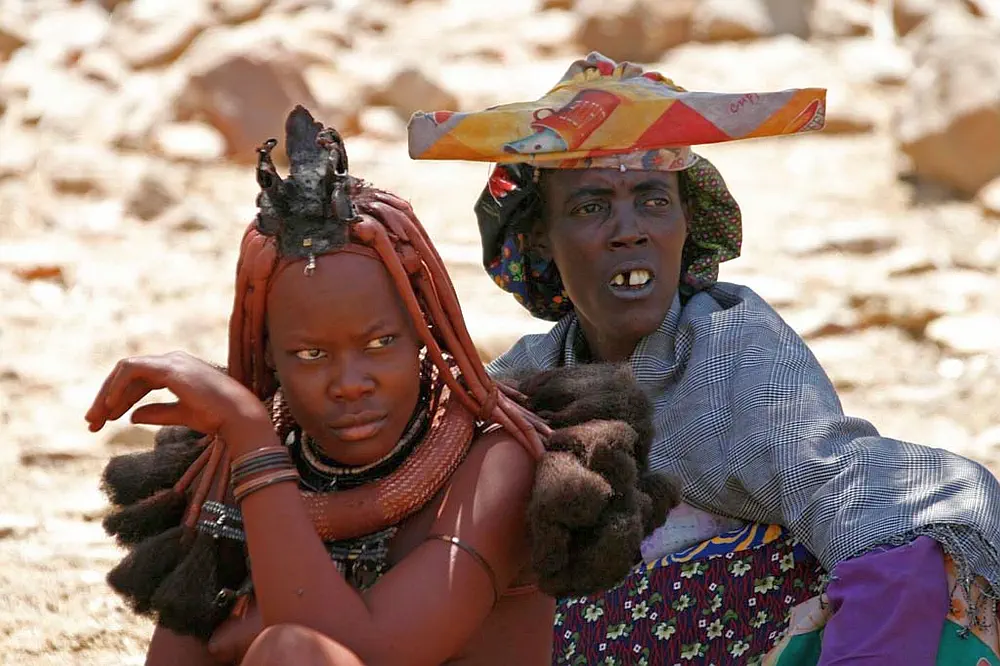
Herero women wear striking, Victorian-style gowns and horn-shaped headdresses.
Etosha National Park Safaris: Big Game Wildlife Tracking
Namibia was the first country in Africa to write environmental conservation directly into its national constitution. Nearly **40%** of the country's land area is managed under national parks, reserves, and community-led communal conservancies.
This bold legal protection allows incredible wildlife spectacles to thrive. In Etosha National Park, massive herds of elephants, zebras, and lions converge around mineral waterholes along the edges of a giant, white salt pan visible from space.
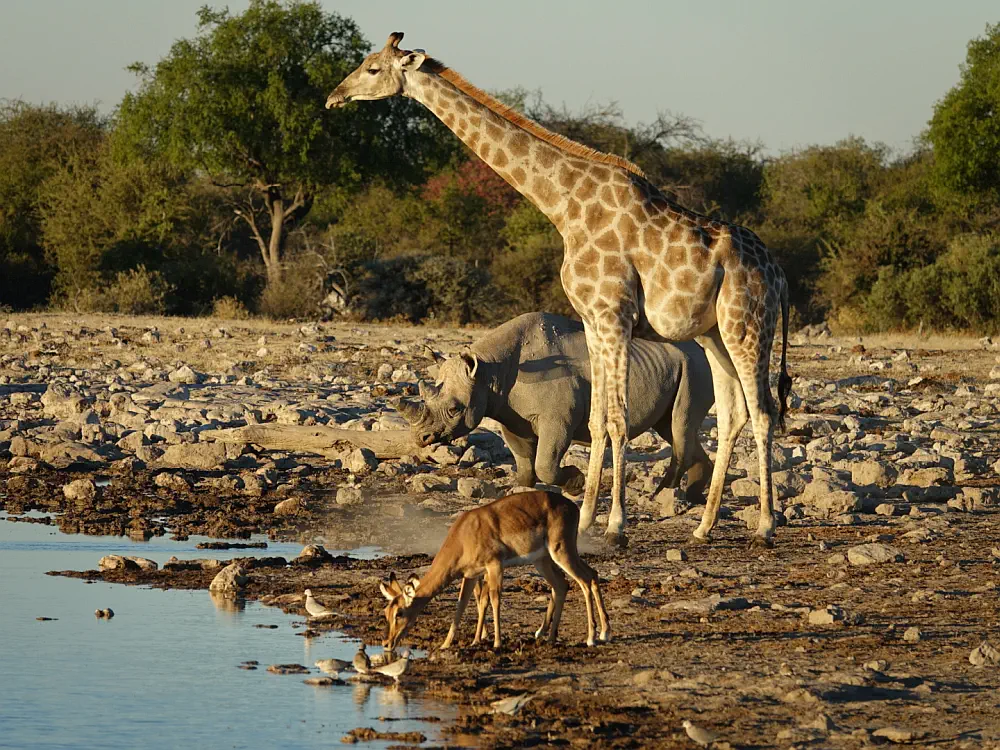
Wildlife gathering at an Etosha waterhole.
Even outside the parks, life finds a way. In the stark, rocky valleys of the Kunene region, you can track desert-adapted elephants that have evolved longer legs and larger feet to trek miles across sand dunes, alongside the last truly wild population of desert-adapted black rhinos.
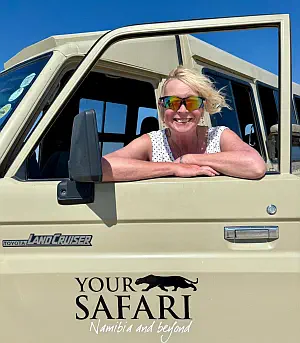
About The Vetting Expert: Kathryn Haylett
Kathryn is a veteran field explorer, author of "The Photographer’s Guide to Etosha," and the founder of Your Safari. She designs custom, safe, and breathtaking itineraries backed by 25+ years of personal African driving experience.
Frequently Asked Questions
Planning a holiday to Namibia is an unforgettable adventure, but it requires careful preparation. To help you plan your journey across the desert landscapes and wildlife conservation reserves, we have compiled the definitive answers below.
Tap water in Namibia is generally safe to drink in major towns, cities (like Windhoek), and established lodges. But in remote rural areas, far north regions, and some campsites, it is safer to rely on bottled water.
We recommend May, June & July. Temperatures are around 20°C to 25°C, making comfortable climbing conditions.
Although you don't strictly need a 4x4, we recommend you consider one. They usually are more robust, as the gravel roads can be rough on any vehicle, with a better ride height for observation purposes. Don't forget to ask for 2 spare wheels.
114 mammal species, including lions, elephants, giraffes, cheetahs, leopards, and thriving populations of both black and endangered white rhinos. No buffalo or hippo though unless you are going to the Caprivi strip.
It is often "Africa for beginners," it has excellent infrastructure, low crime rates, and English is widely spoken.
A visa is required if you are travelling from a country that is not visa exempted. Your passport must be valid for a minimum of 6 months. You can apply directly through the official Namibia e-Services Portal.
The currency used throughout the country is the Namibian dollar. But everywhere also accepts South African Rand. Mastercard and Visa are widely accepted.
You can visit Namibia any time of the year as it is usually dry and warm. Wildlife viewing is best in the dry season, which is from May to October.
Namibia is forward-thinking on LGBT rights than many African nations. All visitors are asked to maintain an understanding of local cultural sensitivities.
Public transportation in Namibia covers the bare minimum. So the best way to get around the country is by car.
While English is the official language, Afrikaans and German are widely spoken.